
What Is Early Orthodontic Treatment?
Early orthodontic treatment, sometimes called Phase One treatment, is care provided for children who still have a mix of baby and permanent teeth. It is not about rushing treatment. It is about identifying problems that may be easier and less complex to correct while the jaw is still growing.
Not every child needs early treatment. Dr. James Kendrick is a Board-Certified Orthodontist with more than 45 years of experience treating children, teens, and adults. He evaluates each child individually and recommends early treatment only when it can make a meaningful difference in bite, jaw development, or future orthodontic care.
Why Age 7 Matters
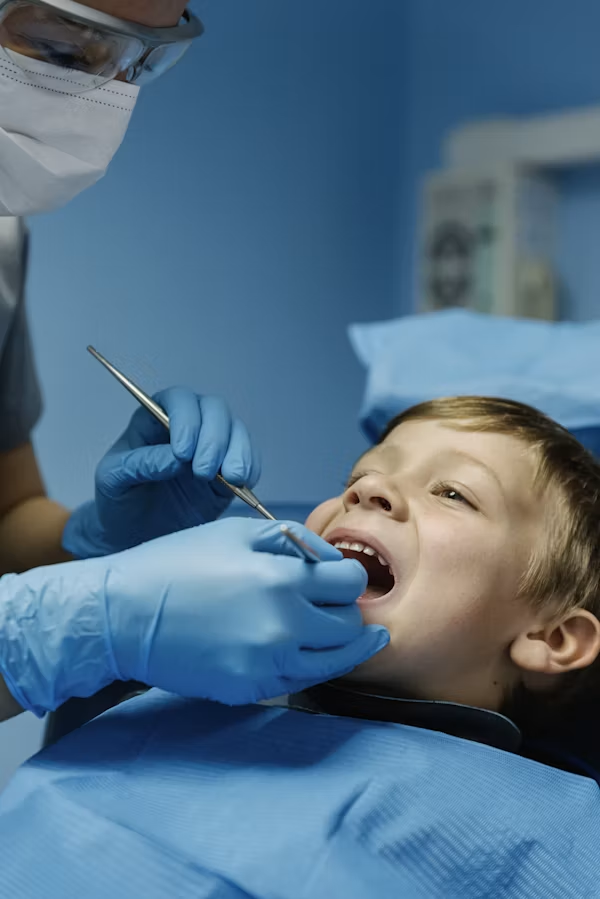
By age 7, enough permanent teeth have come in for Dr. Kendrick to identify developing bite, spacing, and jaw concerns. The jaw is still growing at this stage, which means certain problems can be guided and corrected more effectively than later.
Early evaluation does not always lead to early treatment. In many cases, Dr. Kendrick simply monitors the child's development and begins treatment at the right time.
What Early Treatment Can Address
Early orthodontic treatment is most effective for children with:
- Crossbite affecting jaw alignment and growth
- Severe crowding with insufficient space for permanent teeth
- Overbite or underbite developing during growth
- Narrow palate restricting space for teeth or airway
- Protruding front teeth at risk of injury
- Jaw imbalances affecting bite and facial development
- Habits such as thumb sucking affecting tooth position
Common Signs Your Child May Benefit From Early Evaluation
- Difficulty chewing or biting
- Mouth breathing or snoring
- Teeth that don't come together evenly
- Early or late loss of baby teeth
- Crowded, misplaced, or blocked teeth
- Jaw that shifts or makes sounds when opening
- A bite that looks noticeably off
Early Treatment vs. Monitoring
Not every concern requires immediate treatment. Dr. Kendrick takes a careful, unhurried approach. In some cases, early treatment provides real advantages. In others, monitoring is the right choice — and braces or aligners are started once more permanent teeth are in place.
Dr. Kendrick explains his findings clearly at every visit. You will always understand where your child stands and what, if anything, needs to be done.
How Phase One Treatment Works
Phase One treatment is typically completed between ages 7 and 10. It uses removable or fixed appliances to guide jaw development, create space for incoming teeth, and correct bite problems while growth is still occurring.
After Phase One, most children enter a resting period before Phase Two — which usually involves braces or clear aligners to finalize tooth alignment once permanent teeth are in.


Dr. Kendrick's Approach to Early Treatment
Dr. Kendrick has helped children and families with orthodontic care for decades. During your child's evaluation, he carefully looks at how the teeth, jaws, and airway are developing to identify concerns as early as possible.
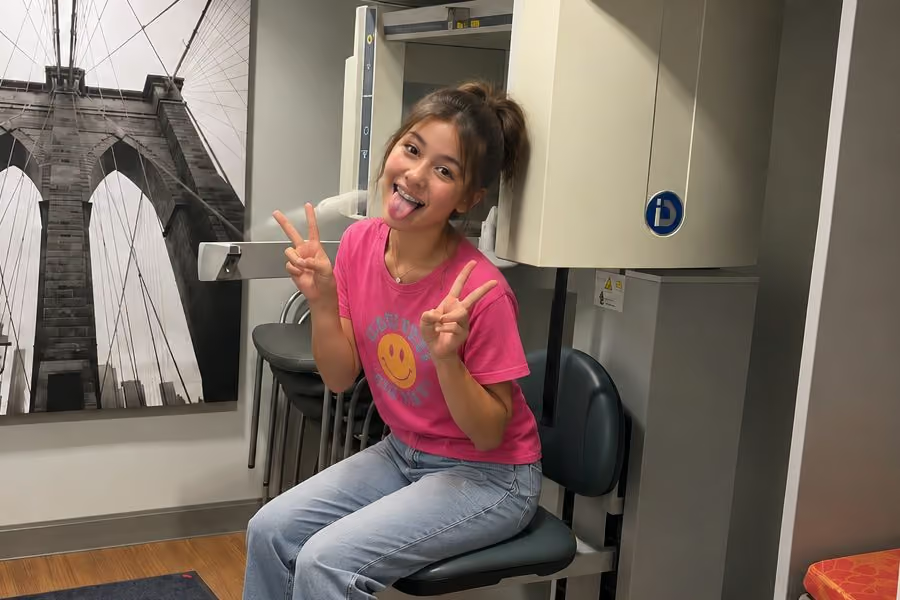
When needed, advanced 3D imaging provides a more complete picture, helping Dr. Kendrick make accurate recommendations and avoid unnecessary treatment.
Early treatment is recommended only when it offers a clear benefit. Parents leave every visit with a clear understanding of what is happening, whether treatment is needed now, and what the next steps should be.
Treatment Options in Phase One
Depending on your child's needs, early treatment at Kendrick Orthodontics may include a variety of appliances designed to guide jaw growth, improve bite function, and create space for permanent teeth. Every treatment plan is customized based on your child's age, growth stage, and specific orthodontic concerns.
- Palatal expander to widen a narrow palate and create space
- Partial braces to address specific tooth or bite concerns
- Functional appliances to guide jaw growth and position
- Space maintainers to hold room for incoming permanent teeth
- Habit appliances to correct thumb sucking or tongue positioning
Orthodontic FAQs
Have questions about braces, Invisalign, TMJ/TMD, or your first visit? Here are a few common questions we hear from patients and parents.
Not necessarily. The evaluation at age 7 is about assessment, not automatic treatment. Dr. Kendrick may recommend monitoring, early intervention, or waiting — depending entirely on what he finds.
For some issues, waiting is perfectly fine. For others — such as crossbite or severe jaw imbalance — early correction is significantly more effective. Dr. Kendrick will tell you honestly which category your child falls into.
Most Phase One treatment is completed within 9 to 18 months, followed by a monitoring period before Phase Two begins.
Often yes. Phase One addresses specific developmental concerns. Phase Two — typically braces or aligners — finalizes alignment once permanent teeth are in. Dr. Kendrick outlines the full expected plan from the beginning.
Many dental insurance plans that include orthodontic benefits cover Phase One treatment. Our team reviews your coverage at the consultation and explains all payment options, including no-interest monthly plans.
Contact Kendrick Orthodontics in Kissimmee to schedule a free consultation. Dr. Kendrick will evaluate your child's teeth, bite, and jaw development and give you a clear, honest recommendation.




.jpg)

.avif)