Invisalign vs. Braces in Kissimmee, FL: Which Is Right for You?
How Do You Choose Between Invisalign and Braces?
Choosing between Invisalign and braces usually begins with one question:
“Which option is better?”
The honest answer is that neither is automatically better for everyone.
Invisalign is discreet and removable. Braces stay on the teeth and give the orthodontist continuous control. Both can produce excellent results when selected for the right patient and supervised carefully.
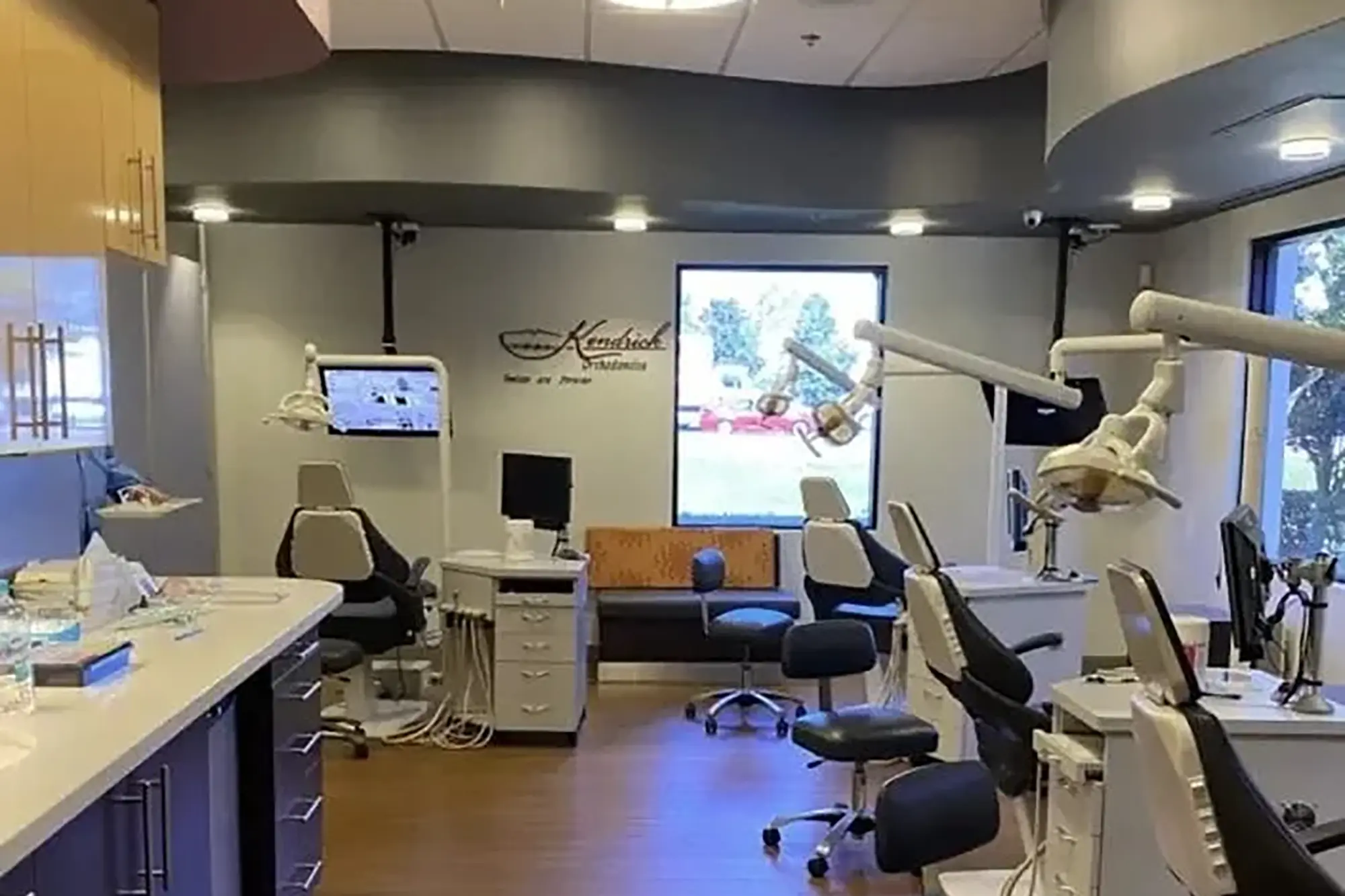
At Kendrick Orthodontics in Kissimmee, Dr. James Kendrick evaluates your teeth, bite, treatment goals, and lifestyle before recommending an option.
Dr. Kendrick is a board-certified orthodontist with more than 45 years of experience and more than 30,000 patients treated. He completed a three-year specialty residency in orthodontics and is a Diplomate of the American Board of Orthodontics and a member of the American Association of Orthodontists.
The appliance matters, but the experience of the orthodontist planning and supervising treatment matters even more.
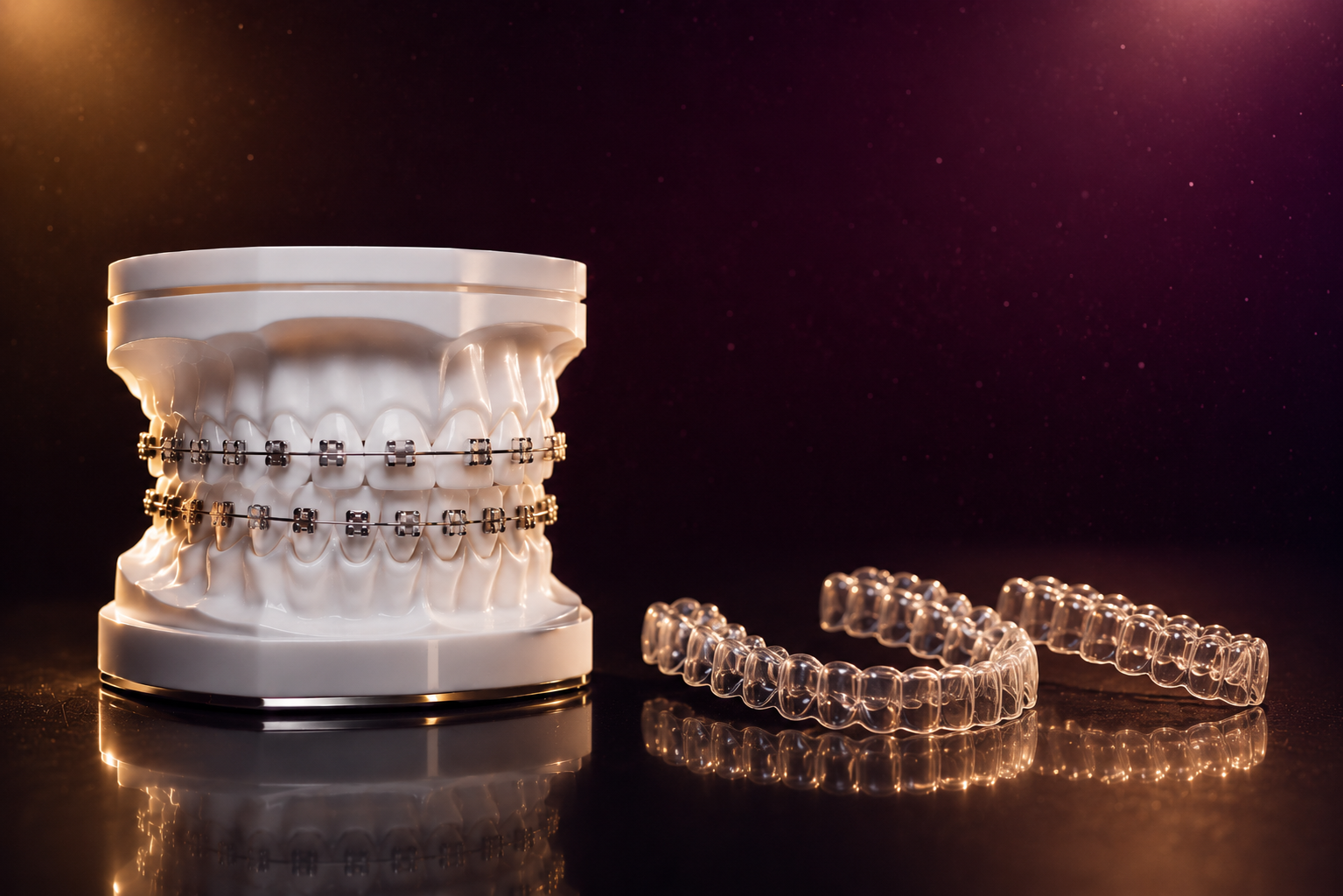
Invisalign vs. Braces: The Basic Difference
Invisalign moves teeth with a planned series of removable clear aligners.
Braces use brackets attached to the teeth and orthodontic wires that guide tooth movement.
The main differences involve:
- Appearance
- Removability
- Eating and cleaning
- Daily responsibility
- The control required for a particular tooth movement or bite problem
Invisalign may be appealing if you want treatment that is less noticeable and can be removed for meals.
Braces may be preferable if fixed treatment gives Dr. Kendrick better control or if you do not want to keep track of aligner wear.
Why Dr. Kendrick’s Experience Matters
Straight front teeth are only one part of orthodontic treatment.
Dr. Kendrick also evaluates:
- How the upper and lower teeth fit together
- Crowding and spacing
- Tooth position and available space
- Overbite, underbite, crossbite, or open bite
- Jaw position and facial balance
- Previous orthodontic treatment
- Long-term stability
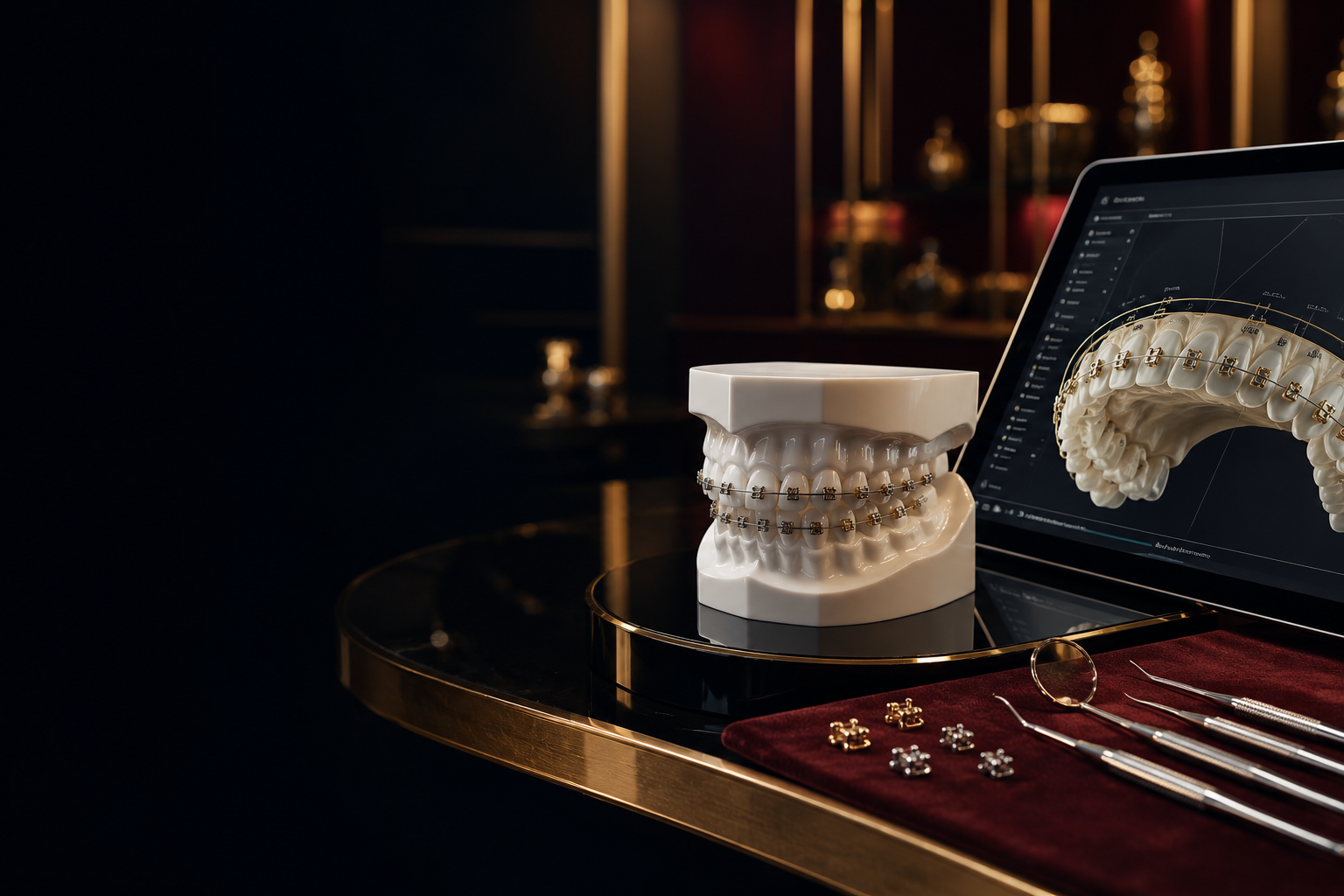
Digital scans and treatment-planning software provide valuable information, but they do not diagnose the patient or make clinical decisions.
Technology can display where the teeth are. An experienced orthodontist must decide where they should go and how to move them safely.
What Is Invisalign?
Invisalign uses custom clear aligners made from digital scans of the patient’s teeth.
Each set is designed to complete part of the planned tooth movement. Most patients are instructed to wear their aligners approximately 20 to 22 hours per day and change them according to Dr. Kendrick’s schedule.
The aligners are removed for meals and oral hygiene. Some patients may also need tooth-colored attachments or elastics to help create particular movements or correct the bite.
Invisalign is removable, but it must be worn consistently. Aligners cannot move teeth while sitting in their case or hiding under a restaurant napkin.
Advantages of Invisalign
Less Noticeable
Clear aligners are usually more discreet than metal braces.
They are not completely invisible, especially when attachments or elastics are used, but many patients prefer their subtle appearance for work, school, photographs, and social events.
Removable for Meals
Patients remove Invisalign before eating, so there are fewer food restrictions.
You can continue enjoying most of your usual foods without worrying about breaking a bracket. The teeth should be cleaned before the aligners are placed back in the mouth.
Easier Oral Hygiene
Because the aligners are removable, patients can brush and floss normally.
This does not mean oral hygiene becomes optional. Wearing aligners over teeth that have not been cleaned can trap food and plaque against the enamel.
Smooth Material
Invisalign does not use metal brackets or protruding wires. Some patients find the smooth aligner material easier on their lips and cheeks.
Temporary pressure or tenderness is still normal when the teeth begin moving or a new set of aligners is started.
When Invisalign May Not Be the Best Choice
Invisalign depends heavily on consistent wear.
It may not be the most practical option for someone who frequently loses removable appliances, forgets to put them back in, or leaves them out for long periods.
Invisalign can treat many orthodontic conditions, including selected complex cases. However, certain tooth movements or bite problems may be more effectively managed with braces.
The important question is not simply whether Invisalign can move your teeth. It is whether Invisalign gives Dr. Kendrick the right control for your complete orthodontic problem.
What Are Braces?
Braces use brackets bonded to the teeth and orthodontic wires to guide movement.
Because they remain attached during active treatment, braces work continuously. Patients do not need to track daily wear time or remember to replace an appliance after meals.
Modern braces may include metal, ceramic, self-ligating, or customized digitally planned systems. Dr. Kendrick recommends a bracket option based on the patient’s diagnosis and treatment needs.
Advantages of Braces
Continuous Treatment
Braces remain on the teeth throughout the day and night.
They can be a practical choice for patients who do not want the responsibility of removable aligners.
Detailed Control
Braces may give Dr. Kendrick more direct control over certain rotations, tooth positions, and bite corrections.
They can also be combined with elastics, springs, expanders, and other orthodontic appliances when needed.
Dependable for Complex Treatment
Braces may be recommended for concerns involving:
- Severely rotated teeth
- Significant crowding
- Impacted teeth
- Complex bite correction
- Tooth movements better managed with fixed appliances
Braces are not an outdated alternative to Invisalign. They remain one of the most reliable and versatile tools in orthodontics.
Nothing to Lose
Braces cannot be misplaced at school or accidentally thrown away after lunch.
They can still be damaged by hard or sticky foods, but at least they will not disappear into the mysterious place where lost retainers, socks, and car keys apparently live.
What Are the Drawbacks of Braces?
Braces are more noticeable than clear aligners, although ceramic or customized options may be less visible than conventional metal brackets.
Patients also need to avoid foods that can damage brackets or wires, including ice, hard candy, sticky caramel, and similar items.
Cleaning requires additional care because plaque and food can collect around the brackets. Dr. Kendrick and the Kendrick Orthodontics team will explain how to brush and floss effectively during treatment.
Temporary irritation of the lips or cheeks may occur while the mouth adjusts. Orthodontic wax can help protect sensitive areas.
Invisalign vs. Braces at a Glance
Appearance
Invisalign: Clear and less noticeable.
Braces: Visible, although ceramic and customized options may be more discreet than traditional metal braces.
Eating
Invisalign: Removed before meals, allowing fewer food restrictions.
Braces: Hard, sticky, and chewy foods that can damage the appliance must be avoided.
Cleaning
Invisalign: Removed for normal brushing and flossing.
Braces: Require careful cleaning around brackets and wires.
Responsibility
Invisalign: Must be worn consistently and stored safely when removed.
Braces: Stay attached, but patients must protect them, maintain good hygiene, attend appointments, and wear elastics when prescribed.
Orthodontic Control
Invisalign: Can treat many conditions when planned carefully and worn correctly.
Braces: May provide more direct control for certain complex tooth movements or bite problems.
Can Invisalign Treat Complex Cases?
Invisalign is no longer limited to small cosmetic corrections.
With proper planning, attachments, elastics, and professional supervision, it may be used for selected cases involving crowding, spacing, overbite, underbite, crossbite, open bite, or movement after previous treatment.
However, the Invisalign brand name does not determine whether treatment will be successful. The diagnosis, treatment plan, and supervision are what matter.
Some patients may receive a better or more predictable treatment plan with braces. Others may be good candidates for Invisalign. Dr. Kendrick will explain the advantages and limitations of each option for your specific case.
Which Option Is Faster?
Neither Invisalign nor braces is automatically faster.
Treatment time depends primarily on:
- The complexity of the orthodontic problem
- The amount of tooth movement required
- The bite
- The patient’s biological response
- Appointment attendance
- Aligner and elastic wear
- Broken or damaged appliances
Dr. Kendrick can provide an estimated timeline after examining your teeth and bite.
Invisalign vs. Braces Cost
The cost of Invisalign or braces depends on the complexity and anticipated length of treatment.
One option is not always more expensive than the other. The estimated fee may also be affected by additional appliances, retainers, available insurance benefits, and payment arrangements.
Kendrick Orthodontics offers free initial consultations. After your evaluation, the team can explain the recommended treatment, estimated fee, and currently available payment options.
Frequently Asked Questions
Is Invisalign better than braces?
Not for every patient. Invisalign offers advantages in appearance, eating, and oral hygiene. Braces may provide better control for certain movements or for patients who prefer fixed treatment.
Is Invisalign faster than braces?
Not necessarily. The timeline depends on the diagnosis, required tooth movement, bite, biological response, and patient cooperation.
Is Invisalign completely invisible?
No. The aligners are clear and usually discreet, but attachments or elastics may be visible.
Can Invisalign correct a bite problem?
Invisalign may be appropriate for selected overbite, underbite, crossbite, or open-bite cases. Dr. Kendrick must evaluate the cause and complexity of the problem.
Can I eat while wearing Invisalign?
Aligners should be removed before eating. Follow Dr. Kendrick’s instructions regarding beverages while wearing them.
Do I need a referral?
No referral is required to schedule a consultation with Kendrick Orthodontics.
Is the first consultation free?
Yes. Kendrick Orthodontics offers a free initial orthodontic consultation.
Choose the Right Treatment for Your Smile
Invisalign is discreet, removable, and easier to clean around. Braces work continuously and may give Dr. Kendrick greater control over certain tooth movements and bite problems.
The right choice depends on your teeth, bite, treatment goals, and lifestyle.
Schedule a free consultation with Dr. James Kendrick at Kendrick Orthodontics in Kissimmee, Florida. We welcome patients from Kissimmee, Celebration, St. Cloud, Poinciana, Hunter’s Creek, and other Central Florida communities.
Call (407) 870-9848 to schedule your visit.


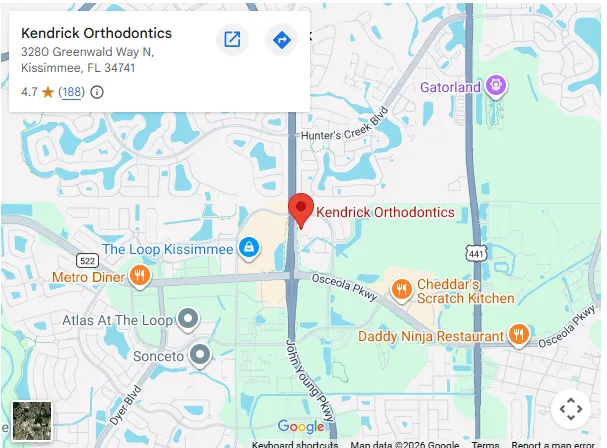
Kendrick Orthodontics
3280 Greenwald Way NKissimmee, FL 34741
Get Directions
(407) 870-9848
info@kendrickorthodontics.com
Kendrick Orthodontics offers comprehensive orthodontic care including clear aligners, TMJ/ TMD care and Custom and Damon Braces for both children and adults in and around the following areas: