Early Orthodontic Treatment for Children in Kissimmee, FL

Your Child’s First Orthodontic Checkup
Many parents wonder, “My child still has baby teeth. Isn’t it too early to see an orthodontist?”
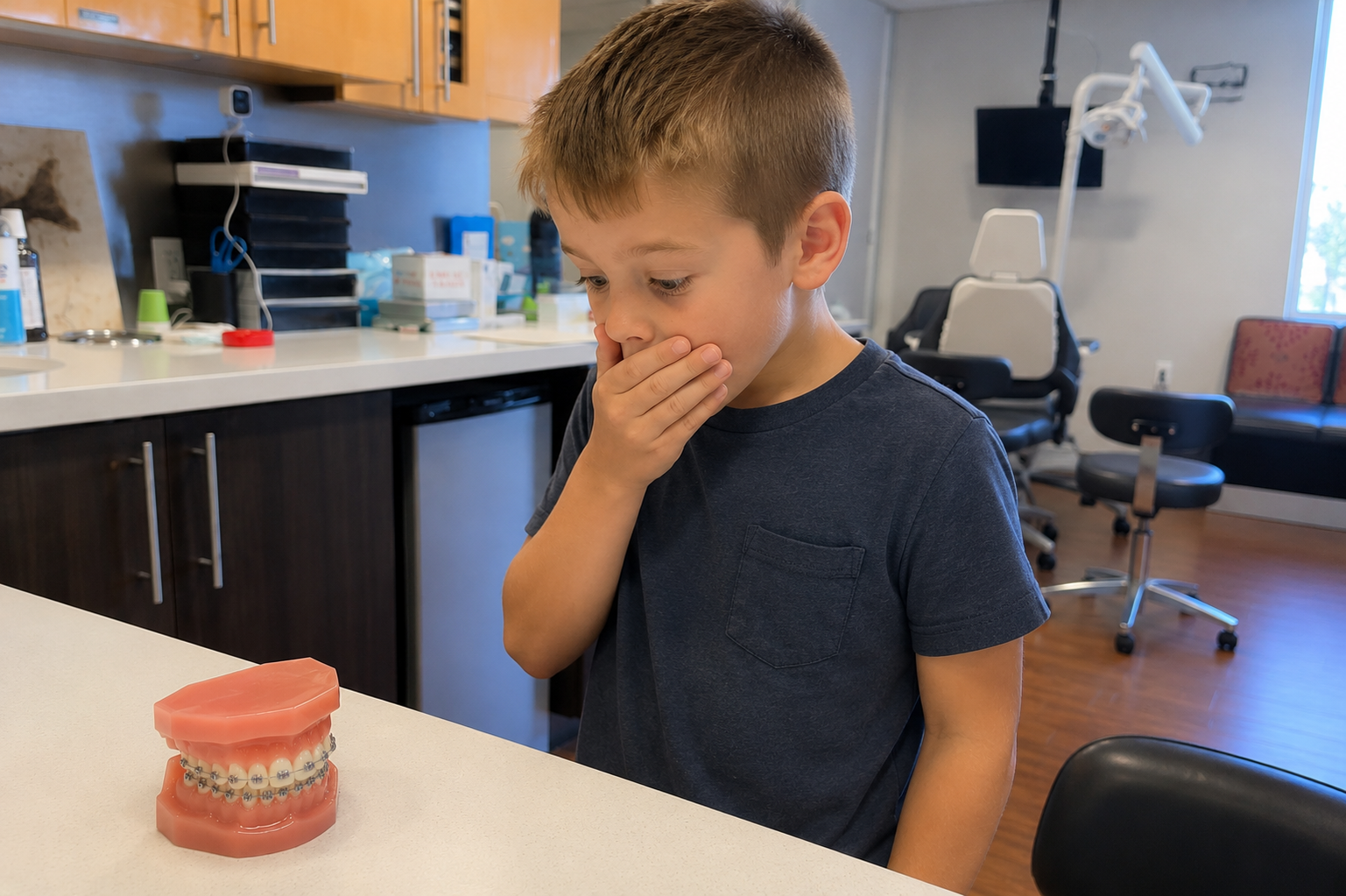
The American Association of Orthodontists recommends a first orthodontic checkup when a problem is recognized and no later than age 7. That does not mean every seven-year-old needs braces. In many cases, the first visit is simply an opportunity to understand how the teeth and jaws are developing and decide whether monitoring is all that is needed.
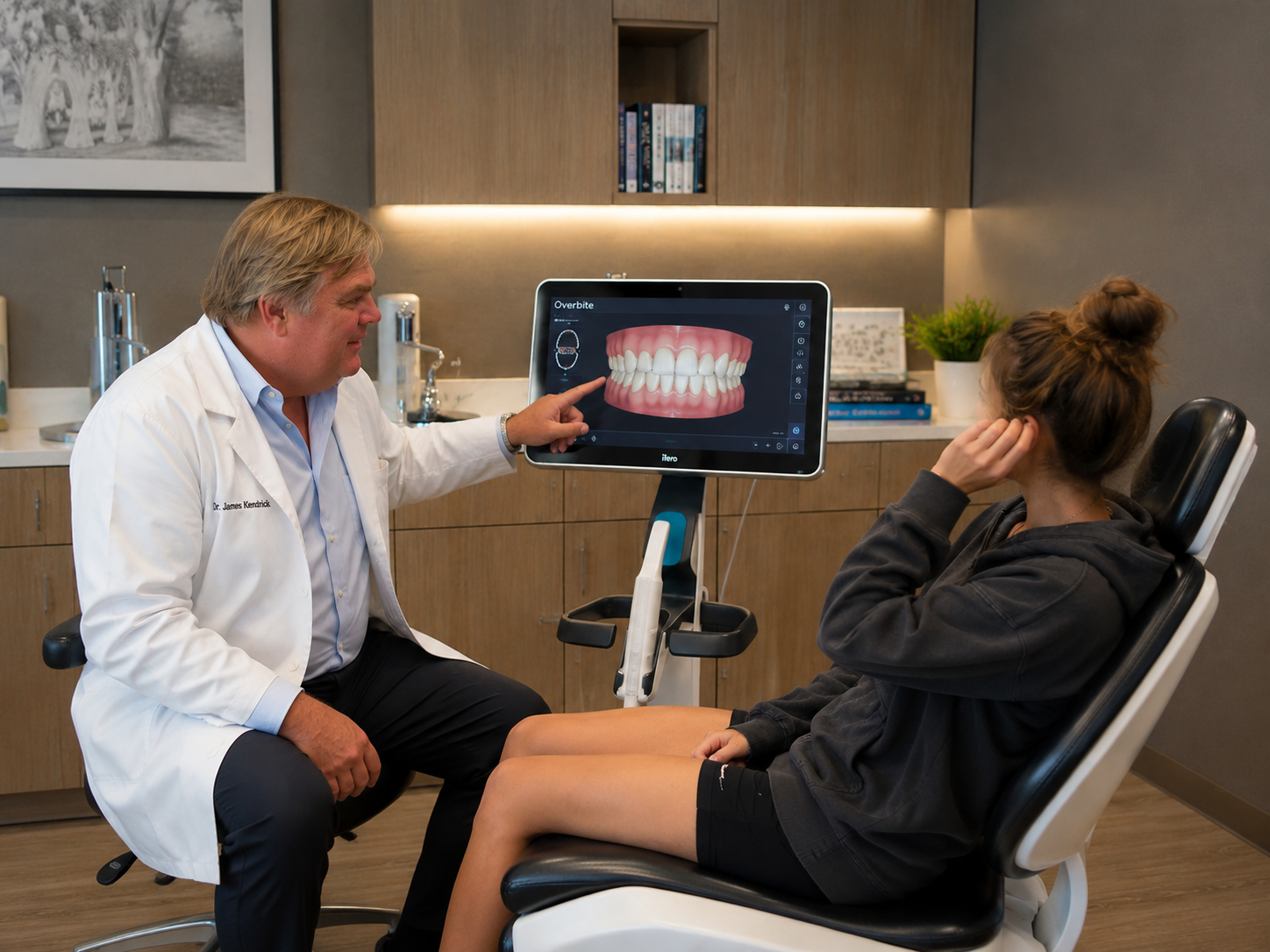
At Kendrick Orthodontics, Dr. James Kendrick evaluates children’s teeth, bite, jaw development, and oral habits. When an orthodontic problem would benefit from earlier attention, treatment may be recommended at the appropriate stage of growth.
Why Early Orthodontic Treatment Matters
Early orthodontic treatment—also called interceptive orthodontics or Phase 1 treatment—takes place while a child still has a mixture of baby and permanent teeth.
The purpose is not to rush a child into braces. Early treatment is recommended only when addressing a developing problem may provide a meaningful benefit.
Depending on the child’s needs, early orthodontic treatment may help:
- Guide developing jaw relationships
- Correct certain crossbites, underbites, open bites, or deep bites
- Create room for permanent teeth that are crowded or blocked
- Reduce the risk of injury to front teeth that protrude
- Address oral habits that are affecting the teeth or bite
- Improve the way the upper and lower teeth fit together
- Establish a healthier foundation for later dental development
Parents often ask, “Why not wait until all the permanent teeth come in?” For many children, waiting is completely appropriate. For others, certain problems may be easier to address while the jaws are still growing.
An early evaluation helps distinguish between those two situations.
What Is the Best Age for an Orthodontic Checkup?
Most children should have their first orthodontic evaluation by age 7.
At this age, Dr. Kendrick can evaluate:
- How the upper and lower jaws are developing
- Whether the permanent teeth have enough room to emerge
- Whether teeth are erupting in an unusual position
- Early crowding or spacing
- Crossbite, overbite, underbite, open bite, or deep bite
- Oral habits that may be affecting the bite
- Signs that should be monitored as the child grows
“Does an evaluation mean my child will start treatment immediately?”
Usually, no. Many children are placed on an observation schedule so their growth and dental development can be monitored. Treatment begins only if and when Dr. Kendrick determines that the timing is appropriate.
Problems Early Orthodontic Treatment May Address
Crossbite
A crossbite occurs when one or more upper teeth bite inside the lower teeth.
Some parents notice that their child moves the jaw to one side when closing the mouth. A crossbite may also cause the bite or smile to look uneven.
Depending on its location and cause, correcting a crossbite during growth may help the jaws and teeth develop in a more balanced position.
Severe Crowding or Blocked Teeth
Sometimes there is not enough room for permanent teeth to emerge normally.
A parent may notice a permanent tooth coming in behind a baby tooth, erupting high in the gums, or appearing in an unusual position. In other cases, a permanent tooth may not have enough room to emerge at all.
Early treatment does not always eliminate the need for future braces, but it may help create space and guide developing teeth.
Protruding Front Teeth
Upper front teeth that extend noticeably forward may be more vulnerable to injury during falls, sports, or everyday play.
Dr. Kendrick can evaluate why the teeth protrude and whether early treatment may help protect them or improve the developing bite.
Open Bite
With an open bite, the front teeth do not meet even when the back teeth are together.
Parents sometimes describe it by saying, “My child can bite spaghetti with the back teeth but cannot bite through a sandwich with the front teeth.”
An open bite may be associated with thumb-sucking, finger habits, tongue posture, or jaw-growth patterns. The appropriate treatment depends on its cause and the child’s stage of development.
Underbite
An underbite occurs when the lower front teeth sit in front of the upper front teeth.
The cause may involve tooth position, jaw development, or both. Because some underbites may become more noticeable as a child grows, an early evaluation can help determine whether treatment or careful monitoring is appropriate.
Harmful Oral Habits
Prolonged thumb-sucking, finger-sucking, pacifier use, or tongue thrust may influence how the teeth and jaws develop.
Parents should not feel embarrassed or blame the child. These habits are common, and stopping them is not always easy. Dr. Kendrick can explain whether a habit is affecting the bite and discuss age-appropriate options when help is needed.
Mouth Breathing, Snoring, or Airway Concerns
Some families schedule an evaluation because their child frequently breathes through the mouth, sleeps with the mouth open, or snores.
These symptoms can have several possible causes. Orthodontists do not diagnose sleep apnea based on a dental examination alone, but the teeth, tongue position, palate, and jaw development may provide useful information.
If there are signs of a possible sleep-related breathing concern, the child may also need evaluation by an appropriate medical professional.
How Orthodontic Evaluation Relates to Breathing and Airway Development
During an early orthodontic examination, Dr. Kendrick does not look only at whether the teeth are straight. He also evaluates how the jaws fit together, the width of the upper arch, the child’s usual oral posture, and whether mouth breathing or other symptoms deserve closer attention.
Parents may be asked whether the child:
- Regularly breathes through the mouth
- Snores or sleeps with the mouth open
- Experiences restless sleep
- Has difficulty keeping the lips comfortably closed
- Has a history of nasal obstruction or other breathing concerns
A narrow upper jaw may sometimes be treated with an orthodontic expander when clinically appropriate. Expansion is primarily used to address orthodontic and jaw-width concerns. Any potential effect on breathing varies by patient and should not be presented as a guaranteed outcome or a substitute for medical care.
When necessary, care may involve communication with the child’s pediatrician, dentist, ENT, sleep physician, or another qualified provider.
What Appliances Are Used in Early Orthodontic Treatment?
Every child is different. Some children need only one appliance for a limited period, while others may benefit from a combination of approaches over time.
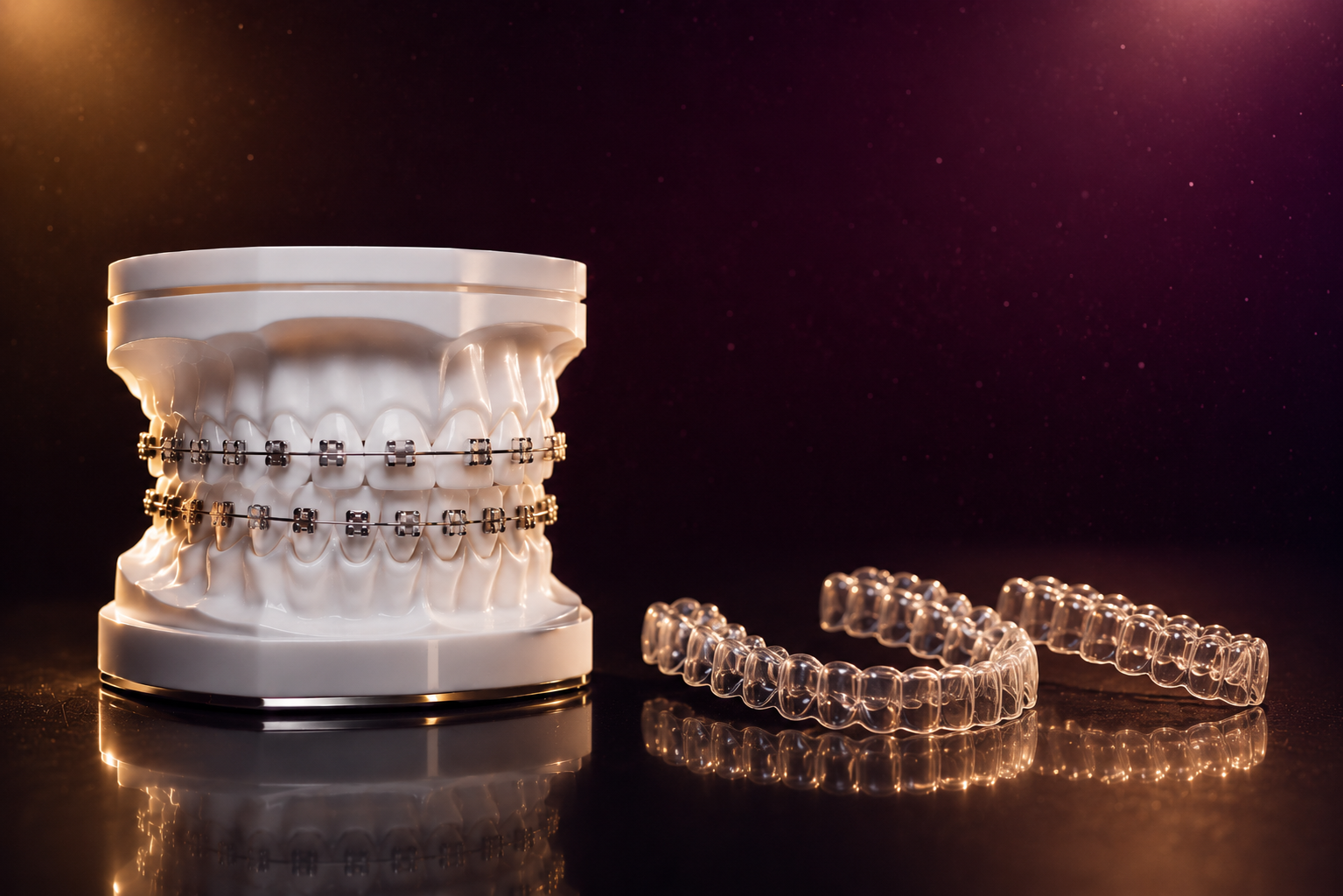
Depending on the diagnosis, treatment may include:
Palatal Expander
A palatal expander may be recommended when the upper jaw is too narrow. It can help correct certain crossbites or create additional room within the upper arch while a child is still growing.
Partial or Limited Braces
Braces may be placed on selected teeth when limited movement is needed. They may help align particular teeth, address an eruption problem, or improve part of the developing bite.
Space Maintainer
If a baby tooth is lost earlier than expected, neighboring teeth may begin drifting into the open space. A space maintainer may be used in appropriate cases to preserve room for the permanent tooth.
Functional or Growth-Guiding Appliance
Certain appliances may be recommended to influence tooth position or guide developing jaw relationships. The appropriate appliance and timing depend on the child’s individual growth pattern and diagnosis.
Clear Aligners
Clear aligners may be an option for selected children or preteens who can wear them as directed. They are not appropriate for every early orthodontic problem.
Habit-Breaking Appliance
When an oral habit continues to affect the teeth or bite, an appliance may sometimes be considered after gentler behavioral approaches have been discussed.
Retainer
A retainer may be used after early treatment to help maintain the correction while the remaining permanent teeth emerge.
What Happens During Phase 1 Treatment?
Phase 1 treatment addresses a specific orthodontic problem during a child’s growth.
The length and details of treatment vary. Visits may include monitoring development, adjusting an appliance, guiding selected teeth, or checking how the bite is responding.
Throughout treatment, Dr. Kendrick evaluates progress and explains what parents should expect next.
The goal is not necessarily to create the child’s final adult smile during Phase 1. It is to address the problem that would benefit from attention now and create a healthier foundation for continued development.
What Happens After Phase 1 Treatment?
After Phase 1, many children enter a resting or observation period.
During this time:
- Permanent teeth continue to emerge
- Jaw growth is monitored
- Retainers or other appliances may be used when appropriate
- Dr. Kendrick checks whether the improvements remain stable
- Future treatment needs become clearer
Parents often ask, “Does Phase 1 mean my child will definitely need braces later?”
Not always. Some children eventually benefit from Phase 2 treatment, while others need only limited refinement or continued observation. The answer depends on how the permanent teeth emerge and how the jaws and bite continue to develop.
If Phase 2 is recommended, it may involve full braces or clear aligners to refine tooth alignment and the bite. Early treatment should not be described as guaranteeing that later treatment will be shorter or unnecessary.
Signs Your Child May Need an Early Orthodontic Evaluation
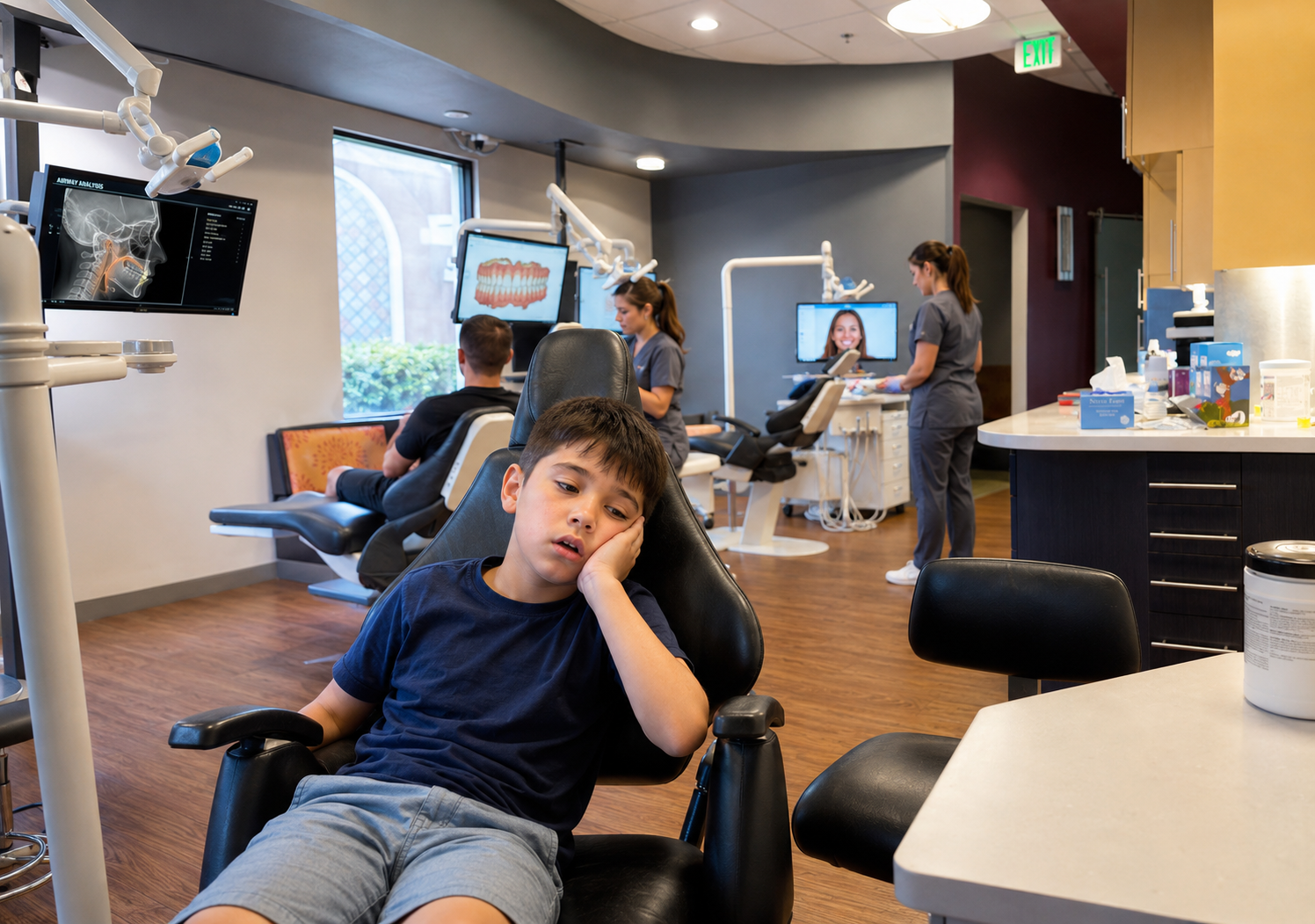
Consider scheduling an orthodontic evaluation if you notice:
- Crowded, overlapping, or blocked permanent teeth
- A permanent tooth erupting behind or outside the normal dental arch
- Early or delayed loss of baby teeth
- Difficulty biting or chewing
- Upper teeth that protrude noticeably
- Front teeth that do not meet
- An underbite, crossbite, or jaw shift
- Thumb-sucking or finger-sucking that continues as the permanent teeth begin emerging
- Frequent mouth breathing
- Snoring or sleeping with the mouth open
- Difficulty closing the lips comfortably
- Uneven tooth wear
- A bite or smile that appears noticeably unbalanced
You do not need to diagnose the problem yourself. If something looks unusual—or your child’s dentist has recommended an orthodontic visit—an evaluation can provide clearer answers.
What Parents Can Expect at the First Visit
Parents usually want to know three things:
- Is there a problem?
- Does it need treatment now?
- What happens if we wait?
During the evaluation, Dr. Kendrick examines the teeth, bite, and jaw relationships. Appropriate diagnostic records may be recommended depending on the child’s needs.
After the examination, the family should understand whether:
- No treatment is currently needed
- Periodic monitoring is recommended
- Early orthodontic treatment may be beneficial
- Another dental or medical evaluation should be considered
The purpose of the visit is to give parents useful information—not to pressure every child into treatment.
Early Orthodontic Treatment at Kendrick Orthodontics in Kissimmee
At Kendrick Orthodontics, board-certified orthodontist Dr. James Kendrick evaluates each child individually before recommending treatment.
Some children need early intervention. Others simply need time, growth, and periodic observation. Both are valid outcomes of an early orthodontic evaluation.
Our goal is to help parents understand:
- What is happening with their child’s teeth and bite
- Whether the problem is dental, skeletal, habit-related, or a combination
- Why treatment is—or is not—recommended
- What the proposed treatment is intended to accomplish
- Whether additional treatment may be needed later
- What alternatives may be available
Families from Kissimmee and surrounding Central Florida communities can receive guidance based on their child’s individual stage of dental and facial development.
Frequently Asked Questions About Early Orthodontic Treatment
Is age 7 too young for braces?
Age 7 is recommended for an orthodontic checkup, not automatic braces. Many children do not need treatment at that age and are monitored until the timing is appropriate.
What is Phase 1 orthodontic treatment?
Phase 1 is limited early treatment performed while a child still has some baby teeth. It focuses on a specific developing problem that may benefit from attention during growth.
Will Phase 1 prevent my child from needing braces later?
Not necessarily. Some children need Phase 2 treatment after more permanent teeth emerge. Early treatment is recommended for the benefit it may provide at that stage—not as a guarantee that future braces will be unnecessary.
How long does early orthodontic treatment take?
Treatment length varies according to the problem, the appliance used, the child’s growth and development, and how the teeth and bite respond. A personalized estimate can be provided only after an evaluation.
Are expanders painful?
Children may notice pressure, tightness, or temporary changes in speaking or eating while adjusting to an expander. Experiences vary, and parents should contact the orthodontic team if discomfort is significant or persistent.
Can early orthodontic treatment help mouth breathing or snoring?
Orthodontic treatment may address certain jaw-width or bite concerns, but mouth breathing and snoring can have multiple causes. These symptoms may require assessment by a pediatrician, ENT, sleep physician, or another qualified medical provider. Orthodontic treatment should not be presented as a guaranteed cure for a breathing or sleep disorder.
What if my child is older than 7?
It is not too late. Children develop at different rates, and an orthodontic evaluation can be helpful whenever a concern is recognized.
Does my child need a referral from a dentist?
No. A referral is not required to schedule your child’s orthodontic evaluation with Dr. James Kendrick at Kendrick Orthodontics. Parents may contact the office directly to schedule an appointment.
Schedule Your Child’s Orthodontic Evaluation in Kissimmee
If you have been wondering whether your child should see an orthodontist, an early evaluation can provide answers—even when treatment is not needed right away.
Dr. James Kendrick can evaluate your child’s developing teeth, bite, and jaw relationships and explain whether observation or treatment is the appropriate next step.
Call Kendrick Orthodontics at (407) 870-9848 or schedule a consultation to discuss your child’s orthodontic development.

Kendrick Orthodontics
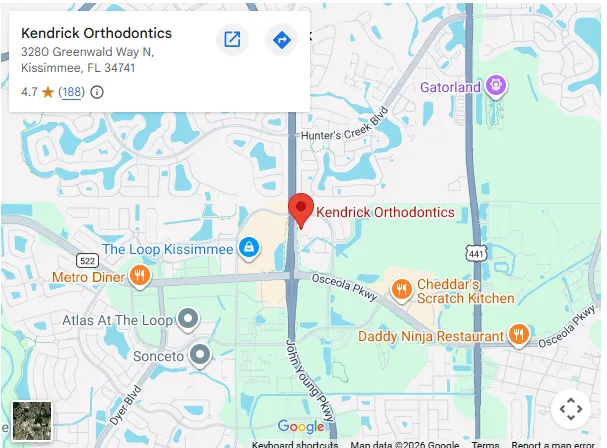
3280 Greenwald Way NKissimmee, FL 34741
Get Directions
(407) 870-9848
info@kendrickorthodontics.com
Kendrick Orthodontics offers comprehensive orthodontic care including clear aligners, TMJ/ TMD care and Custom and Damon Braces for both children and adults in and around the following areas: